





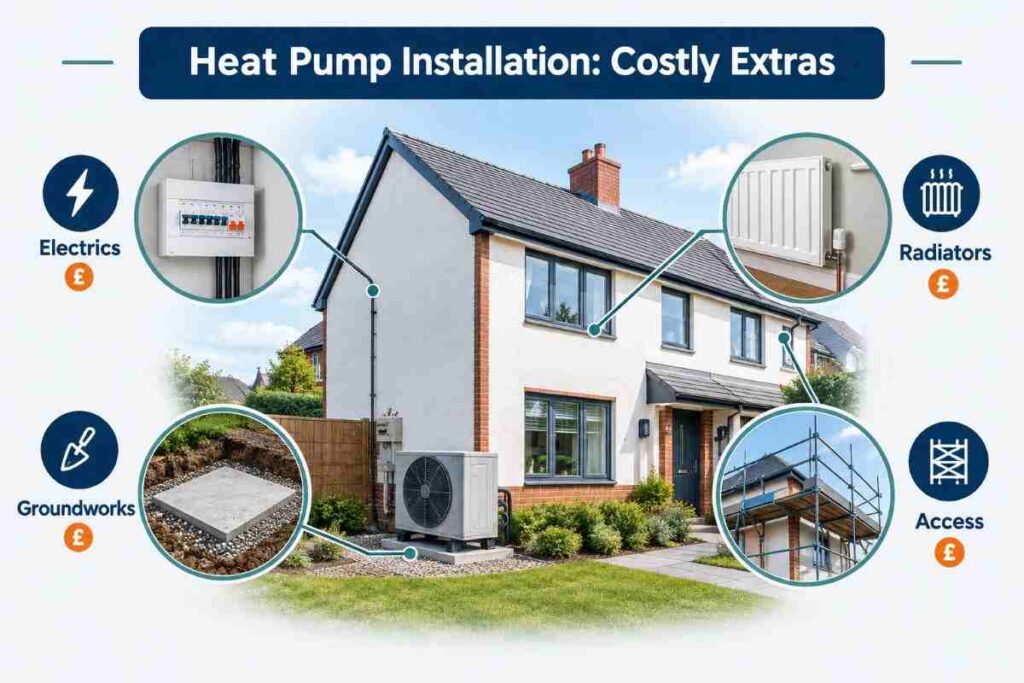
It may seem like you have obtained a competitive quote for a heat pump; however, there may be some unexpected costs involved. New radiators, electrical upgrades and a few unexpected changes can make heat pump installation considerably more expensive than you originally planned. Before you commit to a deal, take a closer look at the additional costs that could be lurking behind that attractive headline figure.
Radiator Upgrades
As heat pumps run at lower water temperatures than gas boilers, you may need to upgrade your radiators to ensure they can provide sufficient heat. It may be necessary to install larger radiators or alternative heat emitters. This is more likely to become an issue in older British properties with greater heat loss.
However, it is unlikely that you will need to replace all of your radiators. By carrying out a heat loss assessment in each room, your installer should be able to recommend which radiators can remain and which require upgrading. Check the breakdown in your quote to make sure you understand the cost. Replacing just 3 radiators will be significantly cheaper than upgrading all your radiators.
Hot Water Cylinder Replacement
If you currently have a standard hot water cylinder installed, then this may not be suitable for a heat pump. Heat pump hot water cylinders will generally require a larger heat exchanger in order to efficiently transfer heat, due to running at lower water temperatures.
In some homes, however, a new hot water cylinder will be necessary as part of the heat pump installation. The size, installation space and pipework required to fit the new system will affect the price. In a 3/4 bedroom house, you may be recommended a 200-300 litre hot water cylinder. However, this should be selected based on how much hot water you are expecting to require.
Electrical Upgrades
Air source heat pumps require an appropriate electrical supply. Older properties may require some electrical work to be completed for the new equipment to be safely installed. Your installer should evaluate the current consumer unit, circuits and supplies available.
Depending on your installation, new circuits, protection, and consumer unit amendments may be required. In some instances, the electricity distribution network operators may need to be consulted. As these costs can vary greatly, check that electrical works are included in your heat pump installation quote so that you do not get any unpleasant surprises.
Pipe Work Upgrades
Even if your pipework seems fine, if the pipe diameters or layout are incorrect, the system may not provide sufficient water flow. Heat pumps often require different water flow rates than older boiler systems.
If water flow through parts of the system is too restricted, you may be advised to replace or alter parts of the pipes. However, depending on the location of pipework (such as below floor finishes or inside fitted wardrobes), this can be very expensive. What seems like a simple pipe adjustment can become very expensive if floorboards, boxing or decoration need to be altered.
Improving Insulation
Properties with poor insulation will be more difficult to heat. While heat pumps can be successfully installed in many older properties, improving insulation in your property may mean that the system can run at a lower temperature, improving efficiency.
Improving the insulation in your lofts, sealing draughts, or adding insulation to poorly insulated areas may be suggested. Typically, 270mm of mineral wool is recommended in UK lofts. However, this will depend on the build and insulation type in place. While improving insulation may be considered in some installations, it is not always essential. Ask your installer which improvements are essential, and which are optional. Before booking your heat pump installation, choose a quotation with a breakdown of costs for: equipment, radiator upgrades, hot water cylinder, pipework, electrical work, ground works and removal of old boiler. Try to get at least 3 quotes, and ask questions if things aren’t included in the cost. Doing this research now can save you from an unpleasant conversation about unexpected costs later.