




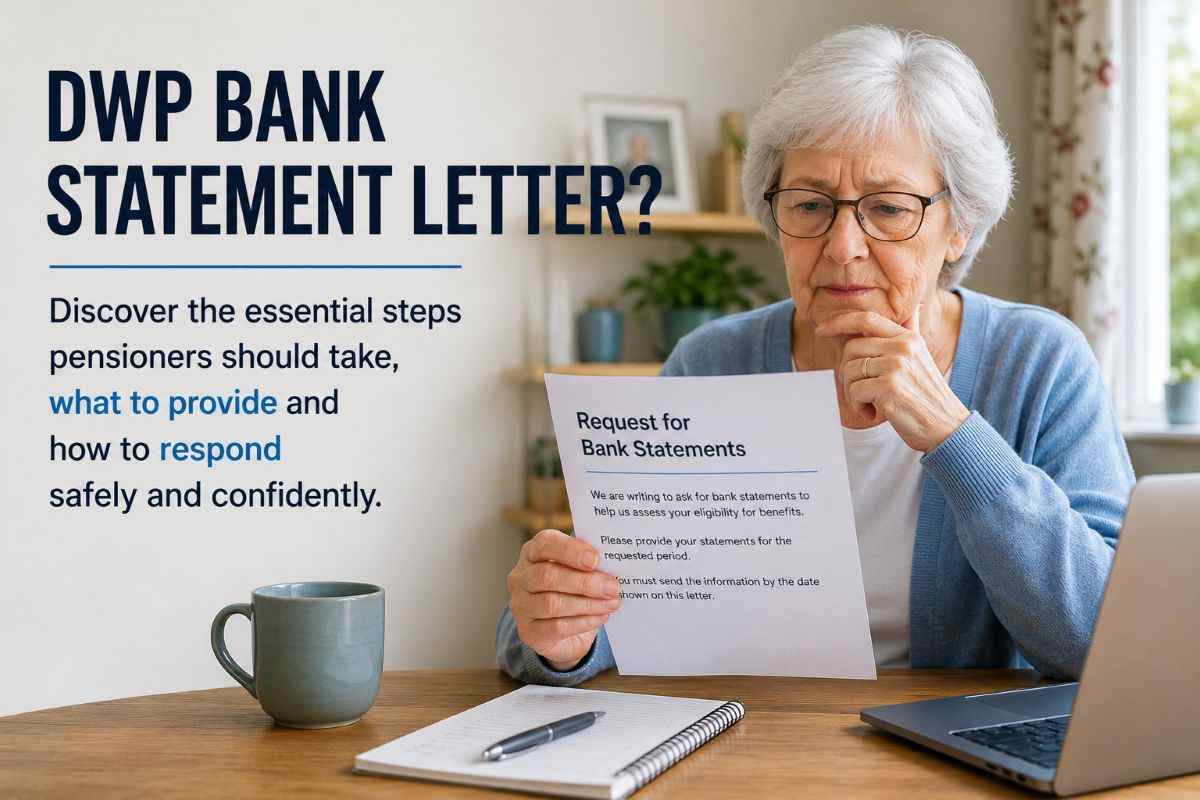
A letter asking for bank statements can be unsettling, particularly if you rely on Pension Credit and worry that your payments could suddenly be stopped. But receiving a review letter does not automatically mean you have done anything wrong.
The Department for Work and Pensions (DWP) has started contacting selected Pension Credit claimants as part of case reviews designed to check that awards are still correct. Some people may be asked for additional evidence, including recent bank statements. (Brum Daily)
What’s actually true about the bank statement requests?
First, the headline needs one important clarification: this is about selected Pension Credit claimants, not every pensioner or everyone receiving the State Pension.
Pension Credit is means-tested, which means entitlement can depend on a person’s income, savings and other financial circumstances. The DWP may therefore need evidence that the information used to calculate an award remains accurate.
Government guidance confirms that Pension Credit claims can involve information about savings and investments, including balances held in bank and savings accounts. Claimants are also expected to report relevant changes to their income, savings, investments or property. (GOV.UK)
DWP guidance on benefit reviews also confirms that claimants can be asked to provide documents relating to money, savings and rent, including bank or building society account information. (GOV.UK)
So, if you receive a genuine letter asking for statements, it is not in itself evidence of fraud or wrongdoing.
Does a bank statement request mean your Pension Credit will be stopped?
No. Being selected for review does not automatically mean your Pension Credit will be reduced or cancelled.
The purpose of the review is to establish whether the existing award remains correct. If the information provided shows that nothing relevant has changed, the award can continue.
However, if the review identifies a change in circumstances that affects entitlement, the DWP may reassess the payment. This is why it is important not to ignore the letter.
The wider issue is that savings, pensions and other income can affect Pension Credit entitlement. A change that was not previously reported may therefore matter when the claim is reviewed. (GOV.UK)
Common mistakes pensioners should avoid
One of the biggest mistakes is assuming that a review letter means the DWP has already decided there is a problem. It has not necessarily done so.
Another is ignoring the deadline because the request feels intrusive or confusing. GOV.UK says that if a Fraud and Error Prevention Service centre is reviewing a Pension Credit claim, it may ask for information about income and savings, and failing to provide information in time can affect benefit payments. (GOV.UK)
There is also a growing risk of scams. Do not automatically trust a phone number, email address or link simply because a message claims to be from the DWP.
What to do if you receive the letter
1. Read the letter carefully.
Check what information is being requested, which period the statements should cover and the deadline for responding.
2. Make sure the request is genuine.
If you are unsure, contact the Pension Service using a trusted GOV.UK contact route rather than relying on a number or link in a suspicious message. The Pension Credit helpline is 0800 99 1234, with opening hours listed on GOV.UK. (GOV.UK)
3. Provide the information requested.
Send the relevant statements and supporting evidence in the way the letter specifies. Do not send extra financial information simply because you think it might be useful.
4. Tell the DWP if your circumstances have changed.
Changes to income, occupational or personal pensions, savings, investments or property may need to be reported. (GOV.UK)
5. Ask for help if you are struggling.
A trusted family member, friend or an independent advice organisation can help you understand the request and organise your paperwork.
The bottom line
A DWP request for bank statements can look alarming, but for selected Pension Credit claimants it can simply be part of a routine case review. It does not mean that every pensioner is being investigated or that payments will automatically stop.
The safest approach is straightforward: check that the letter is genuine, understand exactly what evidence is being requested, respond by the stated deadline and report any relevant change in circumstances.