



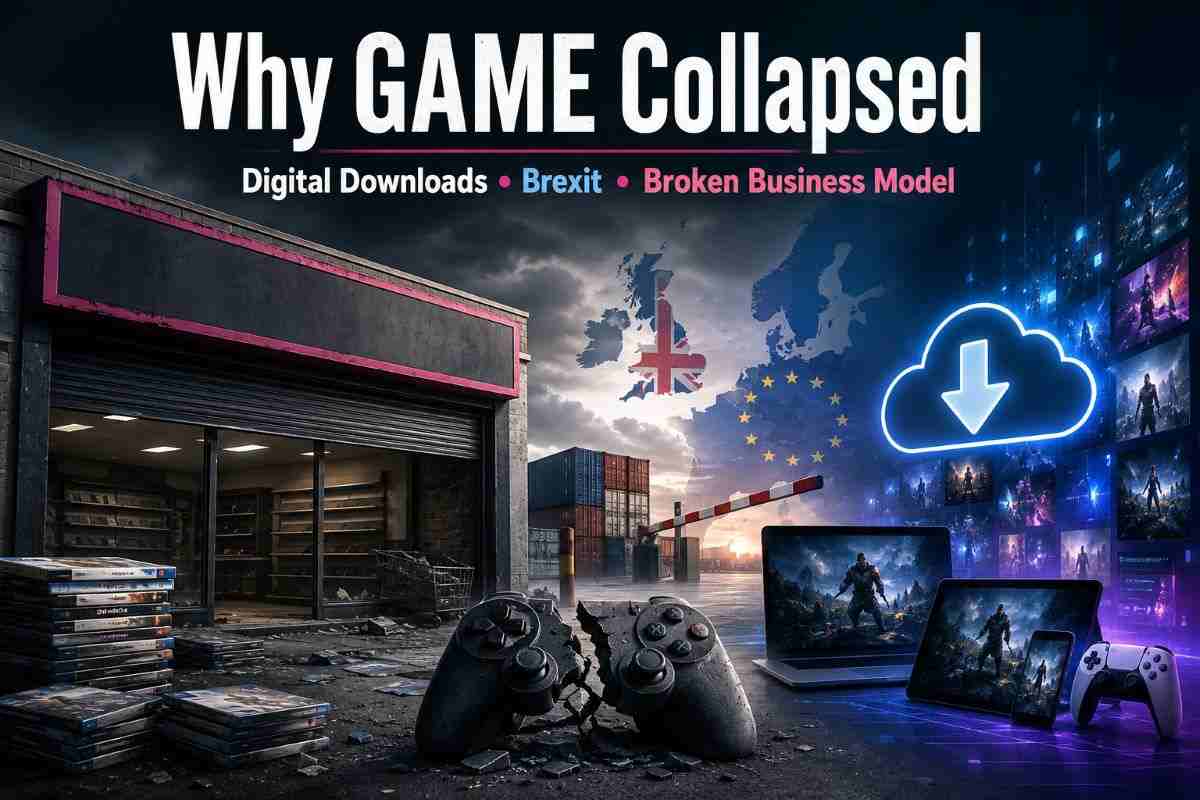
For years, GAME was the place where millions of UK gamers queued for midnight launches, traded old consoles and browsed shelves stacked with the latest releases. Today, however, many of its standalone stores have disappeared, leaving shoppers wondering what really went wrong.
The answer is more complicated than simply blaming online shopping. GAME’s long decline reflects a combination of digital disruption, changing consumer habits, Brexit-related pressures and a retail strategy that struggled to keep pace with a rapidly evolving games industry.
What’s actually true behind GAME’s decline?
One of the biggest myths is that GAME suddenly “collapsed.” In reality, the retailer has experienced years of restructuring, store closures and ownership changes rather than a single dramatic failure.
The biggest challenge came from the rise of digital downloads. Modern consoles from Sony, Microsoft and Nintendo increasingly allow players to purchase games instantly without ever visiting a shop. Subscription services and digital marketplaces have also reduced the need for physical discs, particularly among younger gamers.
At the same time, online retailers became increasingly competitive. Large e-commerce platforms could often offer lower prices, faster delivery and wider stock availability than traditional high street stores.
GAME’s historic business model relied heavily on selling boxed games and making healthy margins from second-hand trade-ins. As more customers shifted to digital purchases, both of those revenue streams came under pressure.
The retailer attempted to adapt by expanding into gaming accessories, collectibles, PC hardware and esports, but these categories proved difficult to scale enough to replace declining software sales.
Brexit added pressure — but it wasn’t the only reason
Brexit is often mentioned as a major factor, and it certainly increased the challenges facing retailers.
Changes to customs procedures, increased import costs and wider supply chain disruption affected many businesses selling imported electronics and physical games. Currency fluctuations also made stock more expensive at various points, squeezing already thin retail margins.
However, Brexit alone did not cause GAME’s problems.
Many retailers faced similar economic conditions but had stronger online operations or more diversified businesses. GAME entered this period already dealing with declining physical game sales, making it less resilient when additional economic pressures arrived.
The wider cost-of-living crisis also changed consumer spending. Gaming remains popular, but households increasingly delayed non-essential purchases or waited for digital discounts rather than buying new releases at launch.
How this connects to the future of physical gaming
The bigger question now isn’t simply what happened to GAME—it’s what the future looks like for physical video games themselves.
Physical games are unlikely to disappear overnight. Many collectors still value boxed editions, limited releases and the ability to resell games. Parents often prefer physical copies as gifts, while some players appreciate owning a disc rather than relying entirely on digital licences.
However, the industry is steadily moving toward digital ecosystems. Subscription services, cloud gaming and digital storefronts continue to grow, giving publishers more direct relationships with customers while reducing reliance on traditional retailers.
That means physical retailers increasingly need to offer something digital stores cannot—expert advice, community events, exclusive merchandise or specialist gaming products.
Common misconceptions about GAME
Several claims continue to circulate online that don’t tell the full story.
“Digital downloads killed GAME.”
Digital sales were a major factor, but competition, changing consumer behaviour, rising operating costs and broader retail challenges all contributed.
“Brexit destroyed the business.”
Brexit created additional financial and logistical pressures, but GAME’s long-term structural challenges began years earlier.
“Nobody buys physical games anymore.”
Physical sales have declined, but they remain important for collectors, gift buyers and players who value ownership or trading games.
“High street gaming retail is finished.”
Traditional stores face significant challenges, but specialist retailers can still succeed by focusing on experiences, premium products and communities rather than relying solely on new game sales.
What consumers can do next
If you still prefer physical games, compare prices between specialist retailers, supermarkets and online stores before buying. Many games receive significant discounts shortly after launch.
Consider whether digital or physical ownership best suits your habits. Digital purchases offer convenience, while physical copies can sometimes be resold or shared, depending on platform rules.
If you’re building a games collection, keep an eye on special editions and independent retailers, which often continue to support physical media even as the wider market shifts toward digital distribution.
Finally, remember that retail trends continue to evolve. Companies regularly adjust store strategies, partnerships and online services, so it’s worth checking official announcements before assuming a particular retailer is disappearing permanently.
Key takeaway
GAME’s decline was not caused by one event or one bad decision. Instead, it reflected a retail model built around physical game sales at a time when the industry increasingly embraced digital distribution. Brexit, inflation and changing consumer spending added further pressure, but they accelerated existing trends rather than creating them.
For gamers, the lesson is clear: physical games still have a place, but the future of the industry is increasingly digital, meaning retailers must evolve well beyond simply selling boxed copies.