



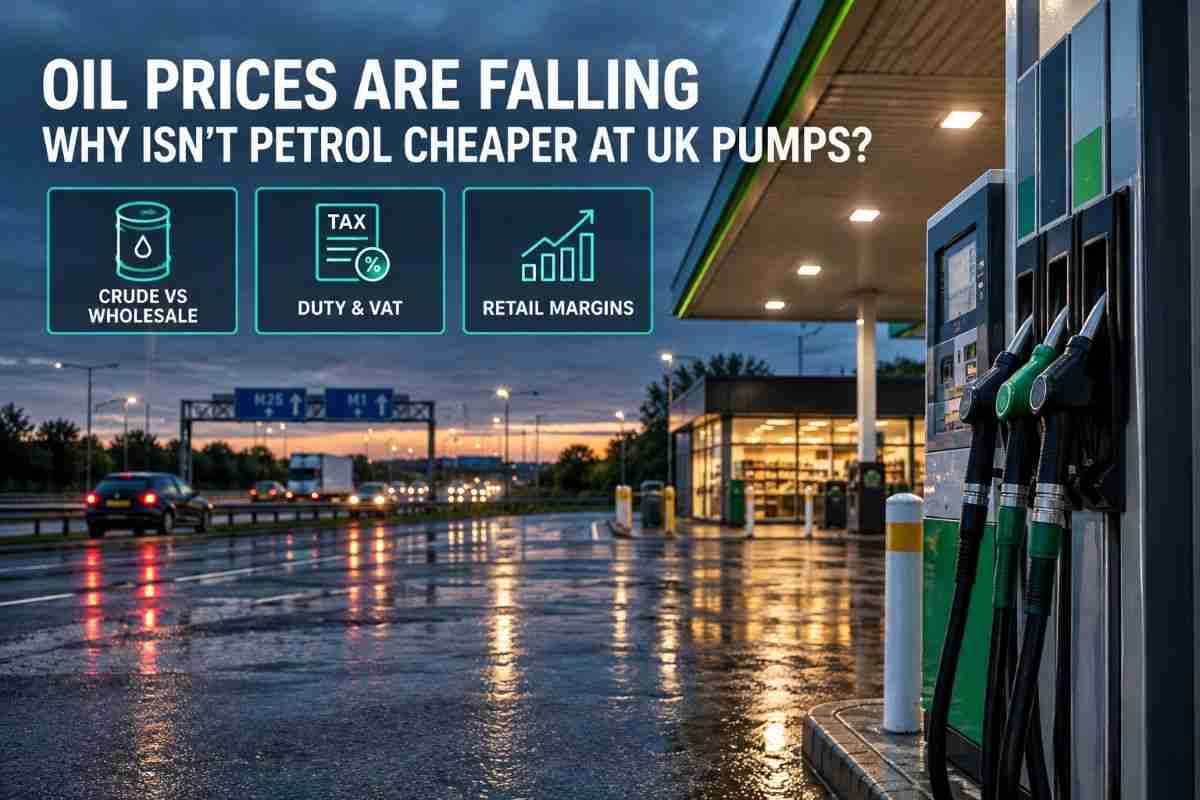
Drivers may expect relief at the petrol station when global oil prices fall. Yet the price displayed on the forecourt can remain stubbornly high, leaving motorists wondering why cheaper oil is not translating into cheaper fuel.
The explanation lies in the journey from crude oil to the pump — and in the taxes, refining costs and retail margins that shape what drivers ultimately pay.
What’s Actually True About Falling Oil Prices?
Crude oil is only one part of the price of petrol and diesel. Before fuel reaches a UK forecourt, it must be refined, transported, stored and distributed. Each stage carries costs that can change independently of the headline oil price.
There is also a timing difference. Petrol retailers generally buy wholesale fuel rather than crude oil directly, and wholesale prices do not always move in line with crude oil on the same day. A fall in oil prices may take time to work through the supply chain, although the delay varies with market conditions.
The pound’s value against the US dollar matters, too. Oil is traded internationally in dollars, so a weaker pound can make imported oil more expensive for UK buyers, partly offsetting a fall in the dollar price of crude.
Why Cheaper Oil Does Not Always Mean Cheaper Petrol
Several factors help explain the gap between falling oil prices and the price displayed at a petrol station.
- Wholesale fuel prices: Retailers buy petrol and diesel at wholesale prices influenced by refined-fuel markets, supply and demand, and distribution costs. These prices can move differently from crude oil.
- Taxes: Fuel duty and VAT account for a substantial part of the price motorists pay. When crude oil becomes cheaper, these charges do not necessarily fall alongside it. VAT is calculated on the applicable taxable amount, so the VAT element can change as the price changes, but fuel duty is a separate charge.
- Refining costs: Turning crude oil into usable petrol and diesel costs money. Refinery maintenance, limited capacity, seasonal demand and disruptions can affect the price of finished fuel even when crude oil is becoming cheaper.
- Retail competition: Forecourts set their own prices based on wholesale costs, local competition, operating expenses and commercial decisions. A station in a competitive area may cut prices sooner than one with fewer nearby rivals.
The important distinction is that a lower crude oil price creates the potential for cheaper petrol, but it does not guarantee an immediate or equal reduction at every pump.
What This Means for UK Drivers
The difference matters for household budgets, particularly for commuters, families and people who depend on a car for work.
If wholesale petrol prices continue falling, competition between retailers may encourage pump prices to follow. But if refining costs rise, sterling weakens or supply becomes tighter, the reduction may be smaller than drivers expect.
Diesel can behave differently from petrol because the two fuels have distinct wholesale markets and patterns of demand. Drivers should therefore compare the fuel they actually use rather than assume both prices will fall at the same rate.
There is also a wider economic connection. Lower oil prices can ease pressure on transport and business costs, potentially helping to moderate inflation. However, the effect on household bills is neither immediate nor guaranteed, and petrol prices alone do not determine the UK’s overall inflation rate.
Common Misconceptions About Petrol Prices
- “If crude oil falls, petrol should fall immediately.” Wholesale fuel prices and retail prices can take time to adjust, and other costs may offset the decline.
- “The government takes the same fixed percentage of every litre.” Fuel duty is generally a fixed amount per litre, while VAT is percentage-based. The balance between these charges and other costs changes with the pump price.
- “Every petrol station should charge the same price.” Retail prices vary with location, competition, supplier arrangements and operating costs.
- “A cheaper barrel guarantees cheaper diesel, too.” Petrol and diesel markets have different supply and demand conditions, so their prices can move by different amounts.
What Should Drivers Do Next?
Motorists do not need to wait for every forecourt to change its prices before looking for savings.
- Compare local prices: Check nearby stations before filling up, using a reliable fuel-price comparison service where available.
- Watch wholesale trends: Falling crude oil prices are useful context, but wholesale petrol and diesel prices offer a more direct indication of possible changes at the pump.
- Avoid unnecessary journeys: Combining errands, checking tyre pressures and driving smoothly can help reduce fuel consumption.
- Check the latest official figures: Use the UK government’s published fuel-price statistics and relevant market data to distinguish a genuine trend from a short-term movement.
The Bottom Line
Falling oil prices can eventually bring relief to UK motorists, but the pump price reflects far more than the cost of crude oil. Wholesale fuel markets, the pound, refining costs, taxes and local competition all influence how quickly drivers see a reduction.
The best approach is to compare forecourt prices and monitor wholesale fuel trends rather than assume that every fall in oil prices will immediately appear on the petrol station sign.