



Many organisations are rethinking their spending habits and environmental commitments in today’s business environment.
Business leaders often ask: Can we reduce office setup costs without compromising quality? How do we create an eco-friendly workplace while staying on budget?
Is second-hand office furniture a smart choice for modern offices?
The answer to these questions is increasingly “yes.” By choosing second-hand office furniture, companies can cut costs, reduce environmental impact, and still create stylish, functional workspaces.
This article explores why more businesses are embracing second-hand solutions, what to consider when selecting furniture, and how it can fit into broader sustainability goals.
Why Cost Savings Are Driving Interest in Pre-Owned Office Furniture
Furnishing a new office or upgrading an existing one can be expensive, especially for businesses operating in cities like London.
New furniture costs increase quickly; desks, chairs, storage, and meeting tables can strain budgets. By opting for high-quality second-hand office furniture, businesses can save up to 50% compared to buying new.
These savings allow companies to reallocate funds to other critical areas, such as technology upgrades, staff training, or marketing efforts.
Reliable providers of second-hand office furniture can offer a wide selection of well-maintained pieces that meet both practical and design needs.
How Sustainability Fits into the Equation
Cost savings are important, but so is reducing environmental impact. According to the UK Green Building Council, the built environment contributes around 40% of the UK’s carbon footprint.
Choosing pre-owned furniture minimises the energy and raw materials needed for manufacturing new products.
Reusing quality items diverts waste from landfills and extends the life cycle of materials, contributing to a circular economy.
This approach aligns with many businesses’ sustainability commitments and can be highlighted in corporate social responsibility (CSR) reporting.
Common FAQs About Second-Hand Office Furniture
Is it reliable?
Yes, when sourced from reputable suppliers. Many pieces are from closed or downsized businesses, meaning the furniture is still in excellent condition. Established suppliers inspect, clean, and refurbish items before resale.
Is it modern enough for a professional look?
Absolutely. Modern office design is less about flashy trends and more about creating practical, comfortable spaces. Many second-hand items come from high-end brands and retain a contemporary style.
Is it customisable?
While customisation is limited compared to new, mixing and matching pre-owned items can create unique and functional layouts. Simple touches like new upholstery or adding storage units can refresh the look.
What Types of Furniture Are Available?
The second-hand market offers a broad selection of products, including:
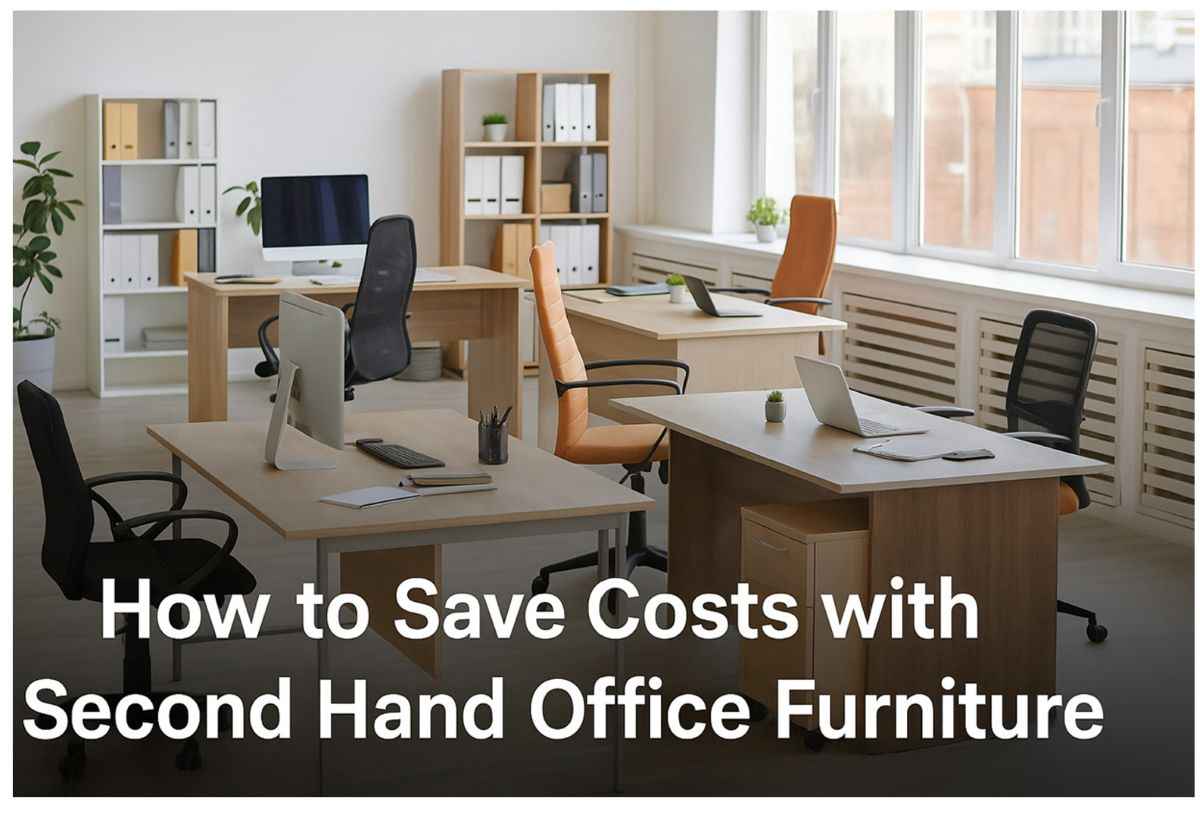
- Desks: Adjustable, modular and corner units suitable for all office layouts.
- Chairs: Ergonomic task chairs, executive seating and visitor chairs.
- Storage: Filing cabinets, bookshelves, and credenzas.
- Meeting Tables: Boardroom and collaborative tables in a range of sizes.
- Accessories: Whiteboards, acoustic panels, and even lighting.
This variety allows businesses to furnish entire offices or select specific items to supplement their existing layout.
Key Considerations When Choosing Second-Hand Furniture
Before purchasing, businesses should consider:
- Condition: Look for suppliers who offer quality checks and refurbishment services.
- Compatibility: Measure available spaces and check dimensions to ensure the furniture fits.
- Quantity: Make sure there’s enough stock to create a cohesive design.
- Functionality: Prioritise ergonomic design to support employee comfort, especially for desks and chairs.
- Sustainability Certifications: Some suppliers offer products with eco-certifications or documented recycling processes.
A thoughtful approach ensures the investment provides both functional value and aesthetic appeal.
How to Incorporate Pre-Owned Furniture into a Modern Office
Combining pre-owned items with existing or new furniture is easier than many businesses expect. Consider these strategies:
- Create a neutral base: Use matching desks and chairs in neutral tones, then add splashes of colour with accessories.
- Blend old and new: Pair pre-owned desks with new task chairs or vice versa to balance cost savings with updated elements.
- Embrace variety: Different styles of meeting tables and seating can add character, especially in creative environments.
This approach creates a balanced, cost-effective workspace without sacrificing professionalism.
The Benefits of Working with Local Suppliers
Sourcing second-hand office furniture from London-based providers has several advantages:
- Reduced delivery times and costs: Local suppliers can offer quicker turnaround times, minimising disruption.
- Access to showrooms: View items in person to assess condition and compatibility.
- Support and guidance: Experienced staff can help plan office layouts and suggest suitable products.
Businesses can rely on suppliers for a wide selection of pre-owned options, backed by local service and support.
Making the Most of Your Investment
To maximise the benefits of second-hand office furniture:
- Plan your layout: Measure spaces carefully and sketch layout options before purchasing.
- Invest in ergonomic options: Prioritise chairs and desks that support healthy posture.
- Maintain your furniture: Regular cleaning and maintenance extend the lifespan of pre-owned items.
- Document sustainability impact: Include the environmental savings in your CSR reports to demonstrate a commitment to green practices.
Final Thoughts
Second-hand office furniture offers a practical and sustainable solution for businesses looking to control costs and reduce environmental impact. It’s a smart choice for companies that want to combine functionality, design and responsibility.
Working with trusted suppliers ensures access to quality items and expert support for businesses in London. Companies can create professional, flexible workspaces while contributing to sustainability goals.