




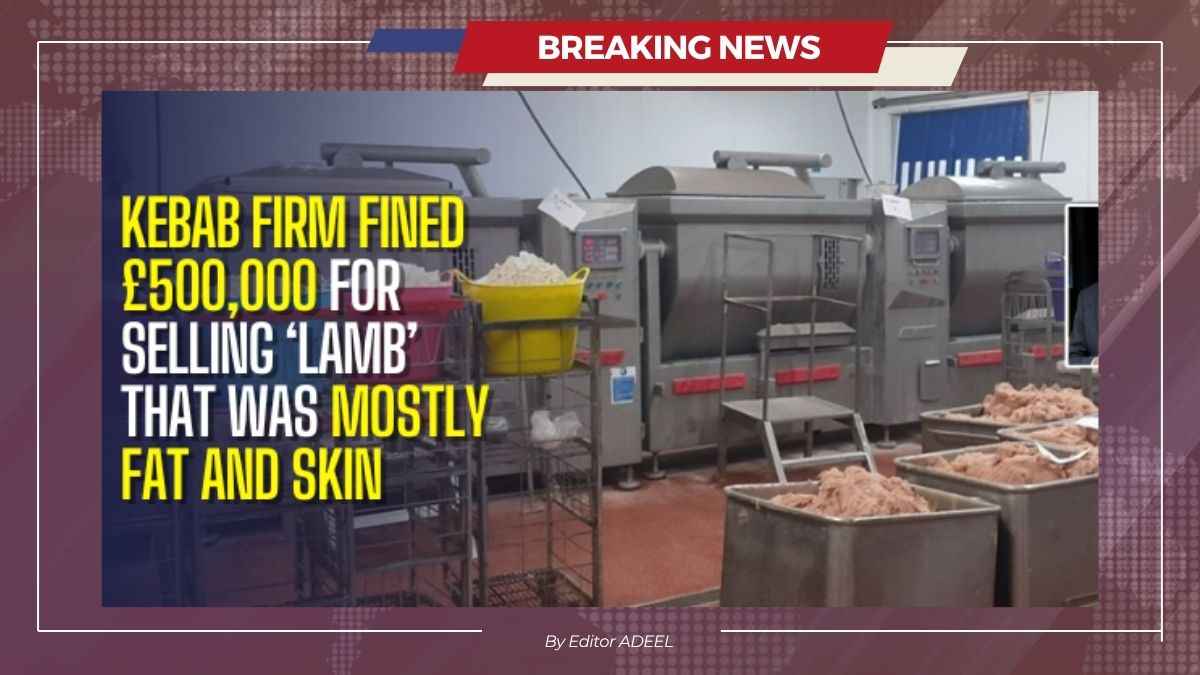
A kebab manufacturer has been fined £500,000 after being discovered to be producing ‘lamb’ products made up of the majority of fat and skin. A court heard that a major U.K. kebab manufacturer has sold far less lamb meat than it claimed in the names of its products, with some being made up of mainly fat, skin and lower quality meat products, and fined £500,000. The case has sparked new worries about food fraud and consumer confidence in the food supply chain.
Kismet Kebabs Ltd, a supplier of kebab products to takeaways, restaurants and wholesalers nationwide, admitted one count of fraud by false representation. The company was also required to pay prosecution costs of £259,298, in addition to the heavy fine, at Swansea Crown Court.
A lengthy investigation into the affair by Swansea Council’s trading standards officers led to the prosecution. The inquiry was initiated after routine sampling of products over the past two years (2020 to 2021) revealed significant differences between the meat content declared on the product label and the meat ingredients found in the products being sold. Several of the products tested significantly varied from their claims.
In court, prosecutor Lee Reynolds claimed the company “misled wholesalers, retailers and consumers, by inaccurately labelling meat products. The ingredients used in the production, such as goat meat, mutton, lamb fat and animal skin, were commonly treated and sold as lamb products, evidence presented to the court showed. During the investigation, one of the lamb doner kebabs that claimed to have 87% lamb content was found to have 51% of meat, with about 40% of it being fat.
The investigation was later extended to include the National Food Crime Unit and the Food Standards Agency. Authorities looked at buying and production records and found these records indicated the company had been deceptively labelling its products for a long time. The court heard the offending had been “considerable dishonesty” and had been going on for an extended period of time.
The judge, even though he was guided by sentencing guidelines that called for a much greater punishment, took into account the changes the company had made since the offences were discovered.
The court agreed that improvements had been made and gave a four-year payment period for the fine. Defence leaders pointed out that the company had “let its guard down” and argued that a higher fine could have jeopardised its viability.
This is the biggest meat product food fraud prosecution in recent years, and is an example of the need to be accurate when labelling food. Consumers are entitled to have confidence that goods are as described in their packaging, especially in the case of dietary, religious and ethical requirements.
According to 5pillarsuk.com, the kebab company has been fined £500,000 after it was discovered that its lamb products contained mostly fat and skin. The chef of the company that sold the “mostly fat” lamb kebabs in Chelmsford was fined £500,000 for the offence after a prosecution by the United Kingdom National Industry and Professionals Association (UKNPA). The fine was issued for “misleading meat labelling” by Kismet Kebabs